
Why do you work?
“Exploring How They Work” is a project where an interviewer—now in their second year of professional life—explores the working lives of people connected to the Musashino area.
By tracing the interviewees’ life stories, we delve into their careers, lifestyles, and the emotions they experienced at various stages of their lives.
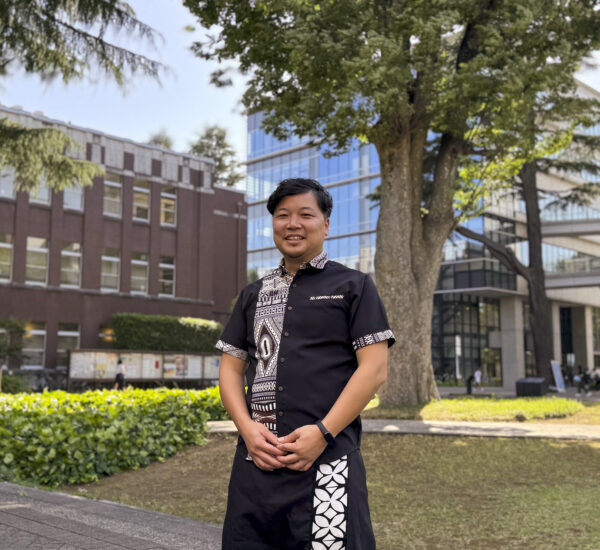
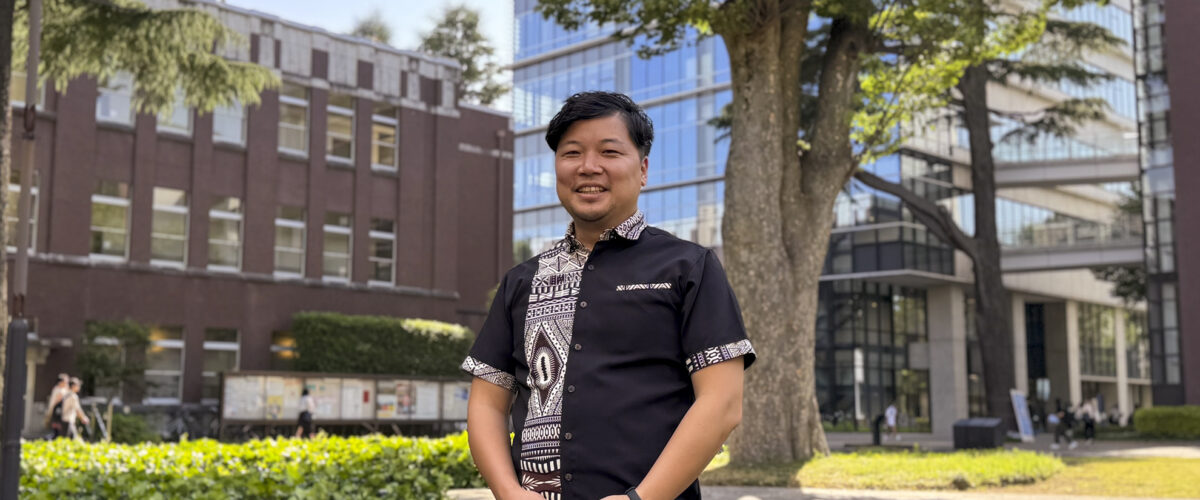
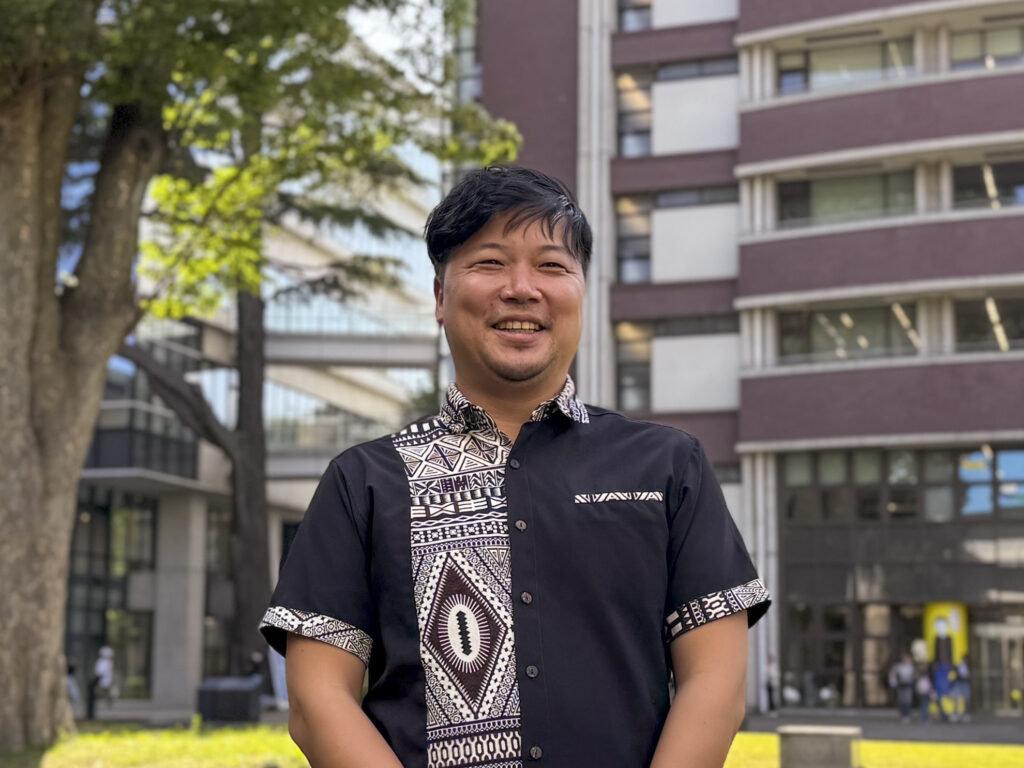
For our third installment, we feature Akifumi Kawakami. He lives in Fiji and runs a business dedicated to solving local social issues.
“I want people to read this not as the story of someone extraordinary, but as the story of an ordinary person,” says Kawakami. What kind of work experiences led him to launch his own business in a foreign country?
Profile: Akifumi Kawakami
Born in Tokyo in 1986. After graduating from high school in Saitama Prefecture, he entered the Faculty of Social Sciences at Hitotsubashi University in 2006. During his university years, he focused heavily on activities with an international NPO. He worked for a foreign-owned consumer goods manufacturer for seven years starting in 2010, then switched jobs in 2017 to join a company specializing in study-abroad programs in Fiji.
In 2021, he struck out on his own and founded Social Innovation Fiji. He runs multiple businesses connecting Japan and Fiji, with “SIF Academy”—which sends Japanese students to Fiji—serving as the core operation.
He has been connected to the Musashino area since his student days, when he began frequenting “Crafthouse VAC” in Musashino City. Currently, his company’s Japanese subsidiary is based at Crafthouse VAC.
Social Innovation Fiji
https://www.sifiji.org/
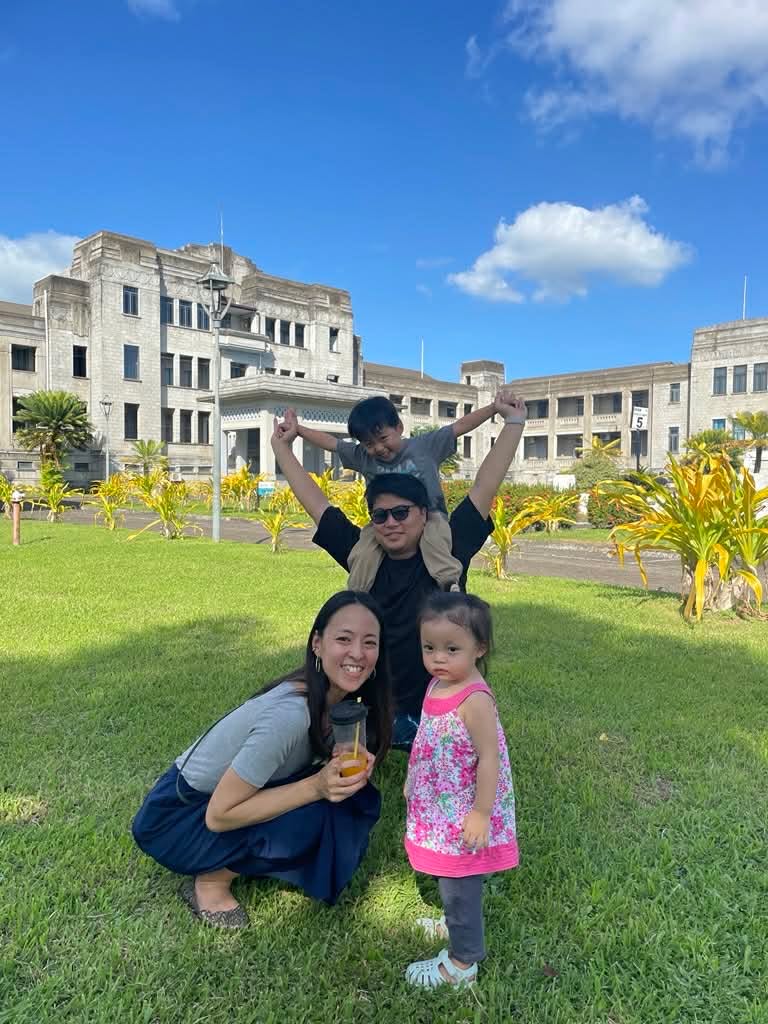

It’s a pleasure to meet you. Today, we’re connecting via video call between Fiji and Japan to hear your story. To start things off, could you tell us about your time as a student? I hear you were very dedicated to extracurricular activities.
I didn’t get into my first-choice university, so I ended up attending a different school. I hadn’t decided exactly what I wanted to do, but I constantly felt that I had to work hard to set myself apart from others. In the interest of personal growth, I joined the Japanese branch of an international NPO—an organization that seemed like the most challenging option available.
So, it wasn’t exactly a smooth sailing start to your student life, then?
That’s right… This NPO ran an internship program for students from Japan and abroad, sending them to companies in both countries. I often wore a suit to visit these companies for meetings.
You really looked like a working professional already! Was there any particular moment during your activities that left a strong impression on you?
It was the moment I was confronted with how small my own world was. I saw a young Indian woman—about my age—working tirelessly to launch a branch of the organization overseas. She excelled at communicating with people and gathering information—skills I completely lacked. And this was despite having studied incredibly hard at cram schools every day throughout high school and my gap year. That experience sparked a growing sense of unease about a Japanese society that places such heavy pressure on academic study.
I also heard that during your student days, you used to frequent “Crafthouse VAC” in the Musashino area.
Crafthouse VAC is an organization that runs a community space in Musashino City. The people there didn’t place much value on money itself; instead, they found happiness in being useful to others and the community, without expecting anything in return. That mindset felt right to me, and I naturally adopted those values myself.
Click here for an interview with Noriko Kokozai from Crafthouse VAC.
“First, try to understand things that seem incompatible.”
After graduating from university, you took a job at a major foreign-owned corporation. Given your background as a student, one might have expected you to work for an NPO, a government agency, or another organization with a strong public mission. What made you decide to work for a private-sector company?
At the time, I viewed private companies simply as places where you make money. I wanted to see how the people working there found happiness. The company I joined was one of the world’s largest manufacturers of snacks and pet food—a classic corporate organization that grew by expanding its scale and generating profit. It was the exact opposite of the values held by the people at VAC, but I wanted to experience for myself the kind of happiness that comes from money.
It’s hard to believe you would intentionally step into a world so fundamentally different from your own. Didn’t you feel any anxiety?
I believe that you can only truly criticize someone once you really know them. I understand the merits of the world I envision as ideal, but I also think there is value in understanding the merits of a world that differs from that ideal.
I see… So, what kind of work awaited you at the company you joined with that mindset?
I worked in supply chain management. It was considered the toughest department in the company, and I often worked late into the night. Thanks to the wonderful people around me, however, I managed to stick with it for seven years.
It sounds like a very demanding workplace. What kind of insights did you gain there?
I developed a perspective that avoids simply categorizing people into “the wealthy who have money” and “the poor who don’t.” My colleagues were all high earners, and some of them used that money to contribute to society. So, you can’t simply criticize someone for being rich. At the same time, there are many forms of richness in the world that wealthy people might lack. I began to wonder if people could support one another by sharing the different things they each possess.
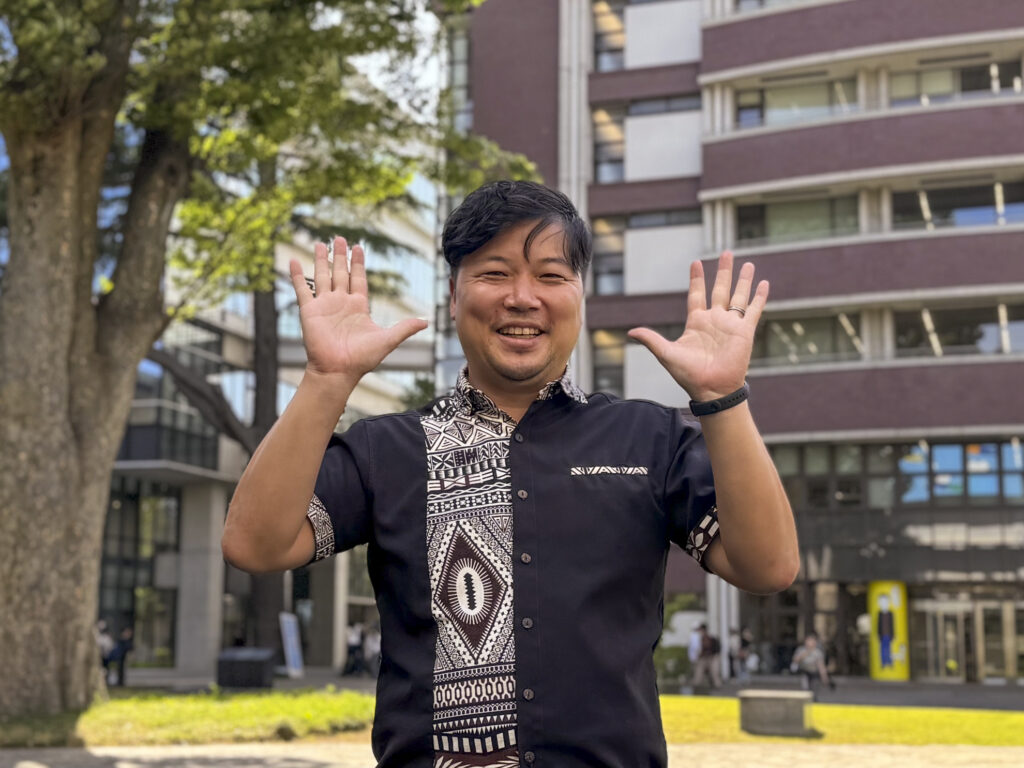
Working Beyond Titles
Amidst that, you changed jobs to a company running study-abroad programs in Fiji.
I wanted to test my abilities at a small company rather than being just a cog in the machine of a large corporation. In my new role, I was responsible for operations on both the Japan and Fiji sides of the business.
That company was also quite a challenge. Sales targets were imposed without any established trust between the Japanese and Fijian staff, and the business was being driven forward through unreasonable demands just to meet those goals.
Then, the COVID-19 pandemic hit in 2021. At the time, there were about 300 Japanese students studying in Fiji, and they found themselves unable to return home. I racked my brain for solutions, but there was simply no way to get them back. I spent my days in despair, feeling like I was failing in my responsibilities.
But it seems the local people in Fiji gave you a new perspective.
A Fijian person said this to me: “You were always complaining about how hard things were even before COVID, weren’t you? You need to make more of an effort to see the positive side of things.” I held a leadership role at my company, but I was constantly overwhelmed just trying to get through each day. In contrast, the local Fijians viewed their situation positively; even amidst the COVID-19 pandemic, they lived happily and full of laughter. I came to realize that job titles don’t matter; what’s truly important is standing shoulder-to-shoulder with your team and thinking things through together.
It sounds like that experience laid the foundation for your approach to working with people. Then, in 2021, you struck out on your own and started your own business in Fiji.
Yes. I launched the company to turn my desire to address social issues in developing countries into reality. By 2026, it will have been five years since I became independent, and our operations focus primarily on two pillars: “people development” and “business creation.”
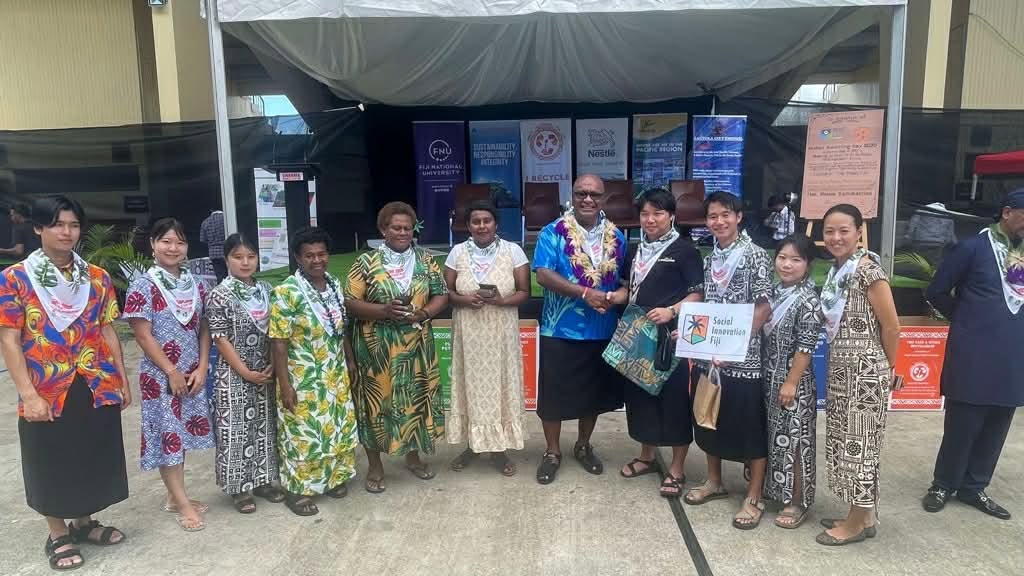
For “people development,” our core initiative is the SIF Academy, a short-term program for Japanese students. Students travel to Fiji to learn about local social issues. During their roughly ten-day stay, they take on the challenge of creating social ventures that leverage their unique personalities. My goal is to nurture young people who can use their passions as fuel to bring happiness to those around them and to society at large.
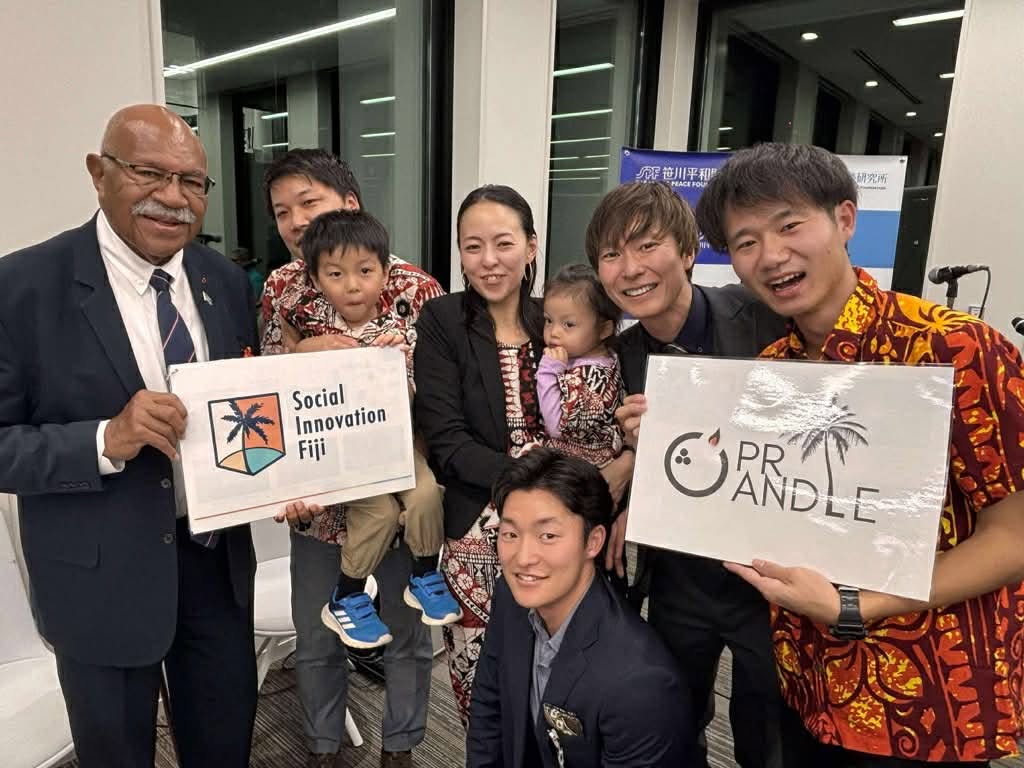
Is there anything specific you focus on regarding how you interact with the participating students?
I make sure not to give them the answers directly. If they ask for an answer, I respond by asking, “What do you think?” I value an approach that draws out their potential, much like a coach would.
And what kind of activities does the “business creation” side involve?
It involves scaling up the business ideas generated at the SIF Academy within the local community. One example is the “ARIGATO EARTH PROJECT.” Conceived by SIF Academy students who focused on the issue of littering in Fiji, this project established a system where collected PET bottles could be exchanged for money. By engaging the local city government and residents, the initiative led to the collection of 72,000 PET bottles over three years. It has since evolved into a nationwide project involving local companies, with a target of collecting 6.2 million bottles annually. I find it deeply rewarding to see small successes grow into something much larger—like launching a great ship from a small beginning.
Between Fiji and Japan
Mr. Kawakami, are you happy in your work right now?
Yes, I am very happy. Even if it’s on a small scale or takes a long time, I am carrying out what I believe is right. I think that creates a positive impact on society. If my life were to end right now, I could say I was happy.
However, I also feel that I haven’t necessarily lived a life that has contributed enough to those around me. That is why, moving forward, I want to solve Fiji’s challenges with a greater level of influence. I want to contribute to others.
Fiji is often called the “happiest country in the world.” Does that Fijian culture and atmosphere contribute to your own sense of happiness?
It certainly does, though I also struggle with the fact that I can never truly become a Fijian. It has been nine years since I first encountered Fiji, but I remain Japanese. I cannot fully share the Fijian sense of happiness. Sometimes, I feel a sense of anguish in that gap between the two worlds.
Recently, however, I’ve found a clue to sharing happiness with Fijian people.
It lies in building relationships with others. At first glance, the Fijians I work with often seem reluctant to take individual responsibility—though I say that with a smile. Yet, they share problems and work together to create solutions.
If I were to use a rugby analogy, it’s like the ball is constantly being passed from person to person.
I see Japan as a society where each individual holds the ball and keeps running separately. That is a valid culture in itself, but I hypothesize that there is a different kind of happiness to be found in “thinking together as a group.”
“Right things, Right way”
While there are certainly challenges, your current work is linked to your happiness. What kind of person do you want to be as you continue your work in the future?
There is a phrase I hold dear: “Right things, right way.” In Japanese, that translates to “doing the right thing in a gentle, considerate way.”
To take action, you need to grasp reality accurately and find the correct approach. However, when conveying that to others, simply stating the “correct” argument might not foster empathy. That is why I think about how to communicate in a way that suits the other person. I want to be someone who possesses both a cool, analytical eye and kindness toward others.
Finally, please tell us about the kind of future society you envision, Ms. Kawakami.
The society I aim for is a world where “a hundred flowers bloom in profusion.” Just as a multitude of flowers bloom in all their glory, I envision a society where we can pursue what we want to do and make a living doing it. I believe that everyone—whether they are currently active in society or not—possesses some form of talent or a “want” (something they wish to do). If there are people unable to pursue those things, we need to remove the barriers standing in their way.
A society where each individual can think, “I’d like to try this,” or “That looks good, too,” and then actually put those ideas into action—working to create such an environment is what brings me personal happiness.
Editor’s Note
At the end of the interview, Ms. Kawakami said, “Please write this in a way that suggests we might have been neighbors in the Musashino area.”
Hearing that she runs social impact initiatives in Fiji makes her seem like someone from another world. Yet, beneath that surface, I discovered a deeply human side to her—filled with the struggles of her student days and the challenges of grappling with values unique to Fiji.
She continues to find happiness in her work, embracing both the setbacks and the hardships. She even dares to immerse herself in situations that might seem incompatible with her own views. The way Ms. Kawakami approaches her work is an ideal I, too, aspire to as I enter my second year as a working professional.
I hope that someone who reads this article gains some insight from Mr. Kawakami’s story and—one day, somewhere in Musashino—happens to run into him in person. That is the kind of day I look forward to.
Read the original article in Japanese here.